Foot Soak: DIY Recipes for Softer, Beautiful Feet
There is something about a proper foot soak that goes beyond basic self-care. When the water is the right temperature, the salts are properly dissolved, and the right oils are floating at the surface, it becomes a ritual. Ten or twelve minutes of doing absolutely nothing except letting the water work. And when those minutes are done, the difference in how the skin feels, how the cuticles respond, how the nails look afterwards is completely tangible.
Most foot soak guides list a few ingredients and call it done. This guide goes much deeper: the chemistry of what actually works and why, five complete recipes for different skin goals, the timing and technique details that most tutorials skip entirely, and five exclusive insights that genuinely change results. A foot soak is the foundation of everything else in foot care. Getting it right changes everything that comes after.
01 The Science Behind a Proper Foot Soak
A foot soak works through a process called hydration-mediated corneocyte softening. The outermost layer of skin is made up of dead cells called corneocytes that are held together by a lipid matrix. When exposed to warm water, this matrix temporarily absorbs moisture, which swells the corneocytes and makes the entire outer skin layer significantly more pliable. The result is the softness felt after soaking and the ease with which exfoliation, cuticle work, and moisturiser absorption happen immediately after.

What most people do not know is that water temperature, soak duration, and the specific ingredients added all interact with this process in distinct ways. The right temperature maximises hydration without causing the skin to over-absorb. The right duration softens without over-waterlogging. The right ingredients amplify what water alone cannot achieve. Understanding these three variables is the difference between a foot soak that produces noticeably soft, prepared skin and one that just gets the feet wet and warm.
The key insight: Water alone softens feet. But a properly formulated foot soak with the right minerals, pH adjusters, and oils does not just soften the outer skin layer. It opens the pathways that allow every subsequent product applied in the first 90 seconds after soaking to penetrate significantly more deeply than it ever could on unprepared skin.
This principle is why the complete foot care routine always begins with a soak rather than going straight to product application. The soak is not preparation for the routine. It is the foundation the entire routine is built on.
02 The Best Ingredients and What They Actually Do
Not every foot soak ingredient marketed as beneficial is supported by real dermatological research. Here are the ingredients that genuinely work, and the specific mechanism by which each one produces its results.
Magnesium Sulfate (Epsom Salt)
At 2 tablespoons per litre, temporarily increases skin permeability and softens the corneocyte layer. Check labels carefully: must be magnesium sulfate, not sodium chloride (table salt), which draws moisture out of skin.
Apple Cider Vinegar
Maintains the skin’s natural acidic pH during extended water exposure. Plain water is pH 7; healthy foot skin sits at pH 4.5 to 5.5. ACV keeps the skin in its protective zone throughout the soak.
Jojoba or Sweet Almond Oil
Added to the soak water as a carrier for essential oils and to directly condition the nail plate. Added in the last two minutes of the soak after mineral absorption is complete for best results.
Tea Tree Essential Oil
Clinically proven antifungal properties at concentrations of 2 to 5 percent. For foot soaks, four drops in one teaspoon of carrier oil provides effective protection without irritation.
Lavender Essential Oil
Contains linalool and linalyl acetate, compounds with documented mild analgesic and anxiolytic effects. The most studied essential oil for relaxation response and one of the safest for skin contact when properly diluted.
Peppermint Essential Oil
Menthol stimulates TRPM8 receptors, creating the characteristic cooling sensation that also increases local circulation. Particularly effective in warm soaks where the contrast between warm water and cooling menthol is most noticeable.
03 5 Signature Foot Soak Recipes
Each of these recipes is formulated around a specific goal. Pick the one that matches the skin condition, the mood, or the occasion. Every recipe is built for a 3 to 4 litre basin with water at 37 to 38 degrees Celsius and a soak time of 10 to 12 minutes.
- 2 tbsp magnesium sulfate Epsom salt
- 1 tbsp apple cider vinegar (5%)
- 5 drops jojoba oil
- 3 drops lavender essential oil (diluted in the jojoba)
- Fill basin with 37°C water
- Dissolve Epsom salt completely
- Add apple cider vinegar and stir
- Mix jojoba and lavender, add at minute 8
- Soak 10 to 12 minutes total
- 2 tbsp Epsom salt
- 2 tbsp apple cider vinegar
- 4 drops tea tree essential oil
- 2 drops peppermint essential oil
- 1 tsp sweet almond oil (as carrier)
- Dissolve Epsom salt in warm water
- Add ACV and stir thoroughly
- Mix essential oils into almond oil
- Add oil blend to the basin
- Soak 12 minutes, towel-dry firmly
- 3 tbsp Epsom salt
- 1 tbsp raw honey
- 1 tbsp coconut oil
- 4 drops lavender essential oil
- Warm water at 38°C
- Dissolve Epsom salt in water
- Melt coconut oil and whisk with honey
- Add oil-honey blend to the basin
- Add lavender and stir gently
- Soak 15 minutes, exfoliate immediately after
- 2 tbsp Epsom salt
- 6 drops lavender essential oil
- 3 drops chamomile essential oil
- 1 tsp jojoba oil (as carrier)
- Dried lavender buds in muslin (optional)
- Dissolve Epsom salt in warm water
- Blend essential oils into jojoba
- Add to water and stir
- Place muslin herb bundle in basin if using
- Soak 15 minutes in a calm, quiet space
- 2 tbsp Epsom salt
- 1 tbsp apple cider vinegar
- 5 drops peppermint essential oil
- 3 drops tea tree essential oil
- 1 tsp aloe vera gel
- 1 tsp sweet almond oil (carrier)
- Use slightly cooler water: 35 to 36°C
- Dissolve salt, add ACV
- Mix oils and aloe in carrier oil
- Add blend and soak 10 minutes
- Apply rich foot cream immediately after
04 Technique: Timing, Temperature, and What to Do After
Most foot soak guides focus entirely on the recipe and ignore the delivery. How long you soak, at what temperature, and what you do in the minutes immediately after are just as important as what goes into the water.

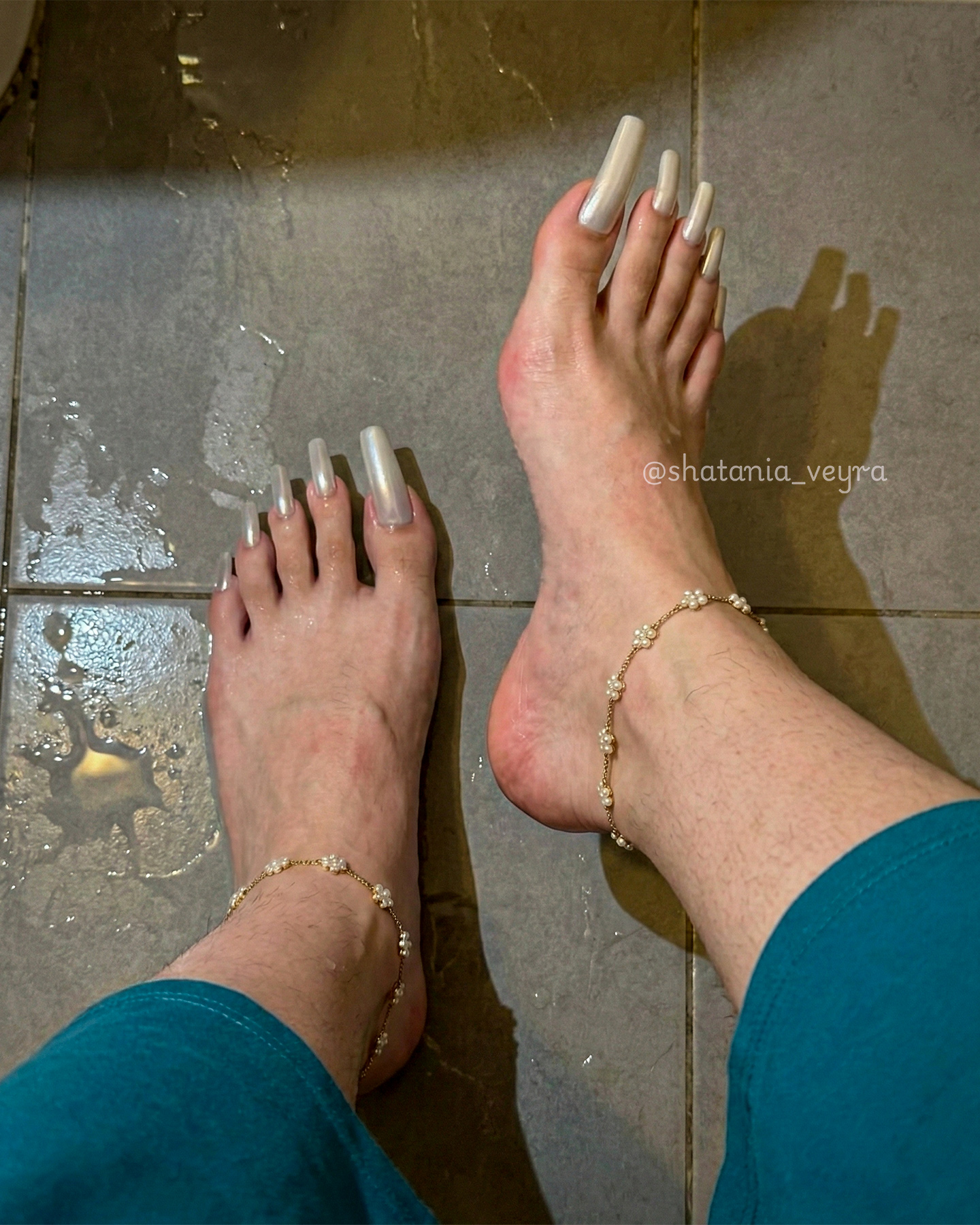
The Right Temperature
Water at 37 to 38°C is the sweet spot. Below 35°C and the softening effect is minimal. Above 40°C and the skin tightens after removal rather than staying soft. Most people run their foot soaks too hot because hotter feels more luxurious. The more effective temperature is body temperature plus a degree or two, which may feel less dramatic but produces significantly better results for cuticle work and product absorption.
The Right Duration
Ten to twelve minutes is optimal for a pre-pedicure soak. Fifteen minutes works well for a relaxation or conditioning soak without nail work to follow. Beyond 20 minutes, the nail plate becomes temporarily weakened through over-hydration, and polish adhesion is reduced. Longer does not mean better in foot soaking. Consistent ten-minute soaks produce better cumulative results than occasional long ones.
What to Do in the 90 Seconds After
The 90 seconds immediately after removing the foot from the soak water are the single highest-absorption window in foot care. Skin permeability is at its absolute peak. Cuticle oil applied and massaged in during this window reaches the nail matrix at two to three times the depth it would on dry skin. For a pre-pedicure soak, dry the foot thoroughly and begin cuticle work inside this window. The exclusive section below goes into the full science of this 90-second opportunity.
“The foot soak is the most underestimated step in foot care. It does not just soften the skin. It opens a window of absorption that makes everything applied afterwards more effective, more penetrating, and more lasting.”
5 Foot Soak Secrets That Change Results
These five techniques come from deep experience and the kind of obsessive testing that produces real, visible differences. None of them appear in standard foot soak guides. Each one addresses something specific that most people do wrong without realising it.
The Mineral Layering Sequence
Most foot soak recipes list all ingredients as if they go in simultaneously. The sequence matters significantly. Fill the basin with water first, add and fully dissolve the Epsom salt, then add apple cider vinegar and stir, and add the carrier oil blend only in the last two minutes of the soak. The reason: oil added at the start coats the water surface and prevents the minerals from reaching the skin at full effectiveness. Added in the final two minutes, the oil is applied to skin that has already been opened and softened by the minerals, and it absorbs at peak capacity. This sequencing consistently produces deeper nail and cuticle conditioning than adding everything at once.
The Skin pH Rebalancing Technique
Healthy foot skin maintains a pH of approximately 4.5 to 5.5, which acts as a natural protective barrier against bacteria and fungi. Plain warm water has a pH of 7, which temporarily disrupts this barrier during soaking. This is why some feet feel more susceptible to skin issues after extended soaking. Adding one tablespoon of raw apple cider vinegar (5% acidity) to the soak water brings the effective pH of the bath water close to 5.5, keeping the skin’s natural protective acid mantle intact throughout the entire soak. The ACV also has documented mild antifungal properties at this concentration. This is not a folk remedy. It is basic skin chemistry, and it makes a measurable difference to how skin responds in the days following a soak.
The Natural Temperature Drop Benefit
Standard advice is to keep soak water as warm as possible throughout the session. The reality is that a foot soak that starts at 38°C and cools naturally to around 35°C over ten to twelve minutes produces more uniform skin softening than a maintained-heat soak. The initial warmth opens the skin and begins the corneocyte hydration process. The gradual cooling creates a slight contraction in the outer skin layer that mechanically helps to flush the now-softened dead cell layer outward, making subsequent exfoliation significantly more effective. This is why foot soaks in naturally cooling water consistently produce smoother results after exfoliation than soaks in water kept hot by a heated basin. Let the water cool naturally rather than topping up with hot water mid-soak.
The Magnesium vs Sodium Distinction
This is the most widely misunderstood aspect of foot soak products. Genuine Epsom salt is magnesium sulfate. Most budget “foot soak” products sold in stores are sodium chloride (table salt) or sodium sulfate with added fragrance. Sodium-based products work through osmosis in the opposite direction to magnesium sulfate: they draw moisture out of skin cells rather than softening them through hydration and permeability. Using sodium-based products for a pre-pedicure soak leaves skin temporarily drier and more resistant to cuticle work than a plain water soak. Always check the ingredient label. The product must list magnesium sulfate as the primary active ingredient. If it lists sodium chloride, sodium sulfate, or simply “bath salt,” it is not suitable for a softening foot soak.
The Post-Soak 90-Second Window
The single most valuable piece of knowledge about foot soaking is what happens in the 90 seconds after the foot comes out of the water. Skin permeability reaches its absolute peak during this narrow post-soak window, before the natural re-barrier process begins. Any product applied to the skin during these 90 seconds absorbs at two to three times the depth and rate it would on dry, unprepared skin. For a pre-pedicure soak: dry the foot thoroughly and begin cuticle oil application and cuticle work within this window. For a wellness soak: have cuticle oil and foot cream ready to apply the moment each foot is dried. The cuticle oil applied in this window reaches the nail matrix. The foot cream applied in this window penetrates deeply enough to produce results that last days rather than hours. Missing this window by even a few minutes reduces product effectiveness dramatically. Preparing products before the soak ends is the habit that transforms this insight from knowledge into consistent results.
06 The Foot Soak as Pre-Pedicure Ritual
Every element of a beautiful pedicure depends on what the foot soak makes possible. Cuticles that have been properly softened in a well-formulated soak respond to the pusher cleanly, in single smooth strokes, with no resistance or tearing. Nail surfaces that have been soaked and then properly dehydrated accept base coat with noticeably better adhesion. Skin that has been soaked and exfoliated immediately after absorbs foot cream with a depth that unprepared skin simply cannot match.
The soak is not a luxury at the start of a pedicure. It is the technical foundation on which every subsequent step performs better. The complete home pedicure guide covers the full four-phase pedicure sequence, including exactly how the soak feeds into each step that follows. For gel-specific pedicure preparation, the gel pedicure guide covers the post-soak dehydration technique that creates maximum gel adhesion on a properly soaked nail.
- For nail length and shaping: Nails filed after a soak are significantly less likely to split or develop micro-tears at the edges because the hydrated keratin is temporarily more flexible. This is especially important when shaping longer nails where more of the free edge is exposed to filing stress.
- For cuticle work: The three-minute warm-to-cool transition wait after drying, combined with a properly formulated soak, produces cuticles that push back in one clean stroke without any of the resistance or folding that rushed cuticle work produces.
- For exfoliation: Chemical exfoliant applied to post-soak skin within the 90-second window penetrates the already-opened outer skin layer far more efficiently than the same product applied to dry skin, producing heel and sole smoothness in a fraction of the time.
- For polish adhesion: Post-soak nails that are properly dehydrated accept base coat with stronger initial grip than non-soaked nails. The temporary increase in nail plate porosity during and immediately after soaking allows dehydrator to penetrate more completely, creating a better bonding surface for the base coat and extending pedicure longevity significantly.
For the complete framework of how foot soaking fits into a weekly and monthly beauty ritual, the foot care routine guide and the pretty feet guide cover the full picture from soak to styling.
Exclusive Access
The Full Ritual, Captured Up Close
Premium photography and behind-the-scenes content showing every step of the foot care ritual, from the soak to the finished result. Available exclusively on Patreon.
Explore Exclusive Content07 Frequently Asked Questions
Worth Saying
A foot soak is ten or fifteen minutes of warm water, the right minerals, and the right oils. That is it. But done consistently, with the right temperature, the right sequence, and the 90-second post-soak habit, it produces a visible cumulative difference in skin softness, cuticle quality, nail health, and how effectively every other foot care product works. It is not a luxury. It is the foundation.
For daily foot beauty inspiration and a closer look at what consistent care produces, follow along on Instagram. For the most exclusive content, close-up photography, and insider technique details, the Patreon membership goes further than anywhere else. And for the full archive of guides from nail design to pedicure technique to foot care rituals, the archive has everything in one place.